

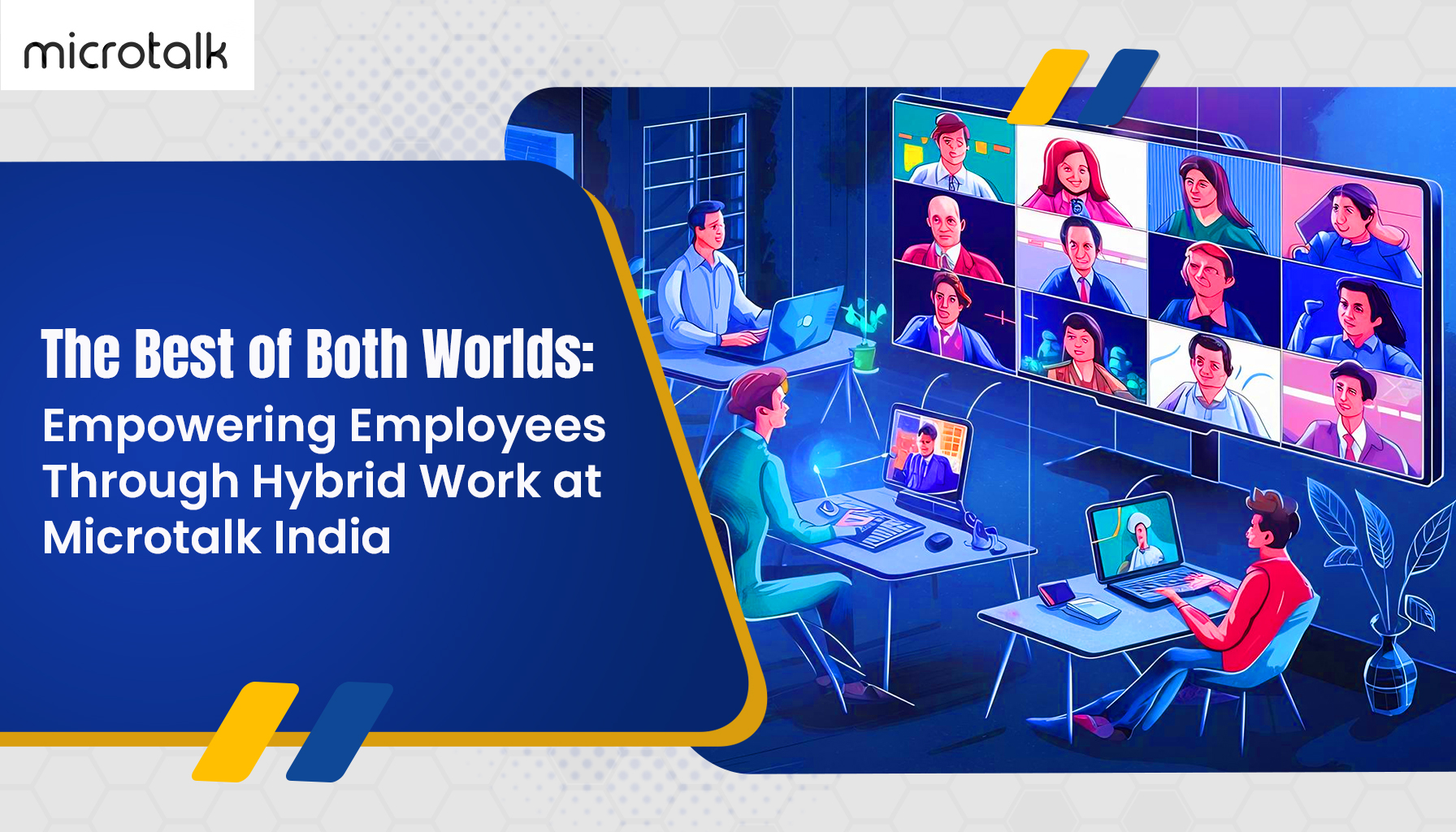
Work Reimagined: How Hybrid Working at Microtalk India Boosts Employee Well‑Being and Productivity
Investing in People Through Flexibility: How Microtalk India’s Hybrid Work Model Enhances Well‑Being and Productivity
The way we work has fundamentally changed. The traditional nine-to-five, office-first approach is no longer the only—or the best—way to drive performance and engagement. At Microtalk India, we recognize that the future of work lies in flexibility, trust, and outcome-driven collaboration. Our hybrid working model reflects this belief, placing employee well-being at the center while enabling higher productivity and sustainable growth.
This evolution is not just about where work happens, but about how work is experienced.
Rethinking Work for the Modern Employee
Today’s workforce values autonomy, balance, and purpose as much as professional growth. The hybrid model adopted at Microtalk India is designed to respond to these expectations, blending the benefits of in-office collaboration with the flexibility of remote work.
By giving employees the choice to alternate between office and remote settings, we empower them to work in environments where they feel most focused, engaged, and effective. This flexibility acknowledges that productivity is not tied to a single location, but to the conditions that allow people to perform at their best.
Flexibility as a Driver of Employee Well‑Being
Employee well-being is a critical pillar of Microtalk India’s people strategy. The hybrid working model plays a significant role in supporting both mental and physical health by helping employees achieve a healthier work-life balance.
Reduced commuting time allows employees to reclaim hours previously spent traveling—time that can now be invested in family, personal development, or rest. This reduction in daily stress contributes to improved mental wellness, higher energy levels, and sustained motivation at work.
Additionally, flexible scheduling within the hybrid framework enables employees to better manage personal responsibilities without compromising professional commitments. The result is a more resilient and satisfied workforce.
Creating Meaningful Connections in a Hybrid Environment
One of the biggest challenges of hybrid work is maintaining strong connections. Microtalk India addresses this by intentionally designing in-person interactions that foster collaboration, creativity, and team bonding.
Office days are structured around activities that benefit most from face-to-face engagement—brainstorming sessions, project kick-offs, leadership interactions, and team-building initiatives. These purposeful moments strengthen relationships, reinforce company culture, and ensure alignment across teams.
At the same time, digital collaboration tools enable seamless communication when working remotely, ensuring that no employee feels isolated or disconnected.
Enhancing Productivity Through Trust and Autonomy
At Microtalk India, productivity is measured by outcomes, not hours logged. The hybrid model is built on trust—trust that employees will manage their time effectively and deliver results regardless of location.
This autonomy encourages ownership and accountability. Employees are empowered to structure their workday around peak productivity periods, leading to improved focus, better quality output, and faster decision-making.
Teams operating within this model report higher engagement levels, as they are able to work without unnecessary distractions while still benefiting from collaborative touchpoints when needed.
Supporting Performance with the Right Tools and Technology
A successful hybrid model requires the right infrastructure. Microtalk India invests in robust digital tools that support collaboration, project tracking, learning, and performance management across locations.
Cloud-based platforms, virtual meeting solutions, and shared knowledge repositories enable teams to work efficiently and transparently. Employees have access to resources that allow them to stay connected, aligned, and informed—whether they are working from home or the office.
This technology-driven approach ensures that flexibility does not come at the cost of coordination or performance.
Leadership in a Hybrid Workplace
Leading in a hybrid environment requires empathy, adaptability, and clear communication. At Microtalk India, leaders are trained to manage distributed teams with a focus on outcomes, engagement, and well-being.
Regular check-ins, open feedback channels, and goal-alignment conversations help leaders stay connected with their teams. Rather than micromanagement, the emphasis is on guidance, trust, and support.
This leadership approach strengthens employee confidence and fosters a culture where individuals feel valued and empowered—regardless of where they work from.
Inclusion and Equal Opportunity in a Flexible Model
The hybrid working model has also contributed to greater inclusivity at Microtalk India. By removing geographical and logistical constraints, more individuals can access meaningful career opportunities without being limited by location or personal circumstances.
Equal access to learning, leadership visibility, and growth opportunities ensures that performance—not proximity—drives success. Inclusive virtual forums and transparent communication practices further reinforce fairness and belonging within the organization.
Sustaining Engagement and Preventing Burnout
While flexibility offers numerous benefits, Microtalk India is mindful of the risk of overwork in hybrid environments. To counter this, we actively encourage healthy work boundaries.
Managers promote regular breaks, realistic workloads, and time-off utilization. Clear expectations around availability help employees disconnect and recharge, preventing burnout and fatigue.
By addressing well-being proactively, Microtalk India creates an environment where employees can sustain high performance without compromising their health.
Looking Ahead: The Future of Work at Microtalk India
The hybrid work model is not a temporary adjustment—it is a long-term commitment to building a better workplace. As business needs and employee expectations continue to evolve, Microtalk India remains committed to refining its approach through continuous feedback and innovation.
We see hybrid work as a powerful enabler: one that supports employee well-being, strengthens collaboration, and drives consistent productivity. By balancing flexibility with accountability, and autonomy with connection, Microtalk India is creating a future-ready workforce equipped to thrive in a dynamic world.
Conclusion
Investing in people means investing in how they work. At Microtalk India, our hybrid working model reflects a deep understanding that well-being and productivity are interconnected. By offering flexibility, trust, and the right support systems, we empower employees to perform at their best—professionally and personally.
The workforce of tomorrow values balance, purpose, and adaptability. Through its hybrid approach, Microtalk India is not just keeping pace with change—we are actively shaping the future of work.